Easy Sattvic Ragi Kanji (Finger Millet Porridge) for Samyama & Yoga Diet
Easy Sattvic Ragi Kanji (Finger Millet Porridge) for Samyama & Yoga Diet
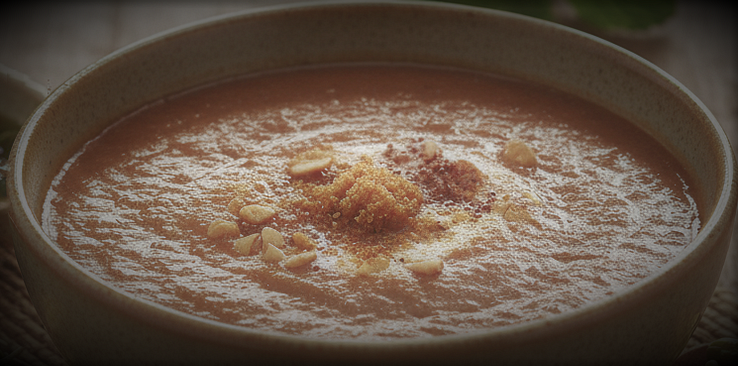
A simple, light, and naturally positive pranic meal. Vegan and Gluten-Free, this is the ideal accompaniment to deep sadhana.
Alternate Flours
Ragi is well-regarded in Ayurveda for its easy digestibility. You can try this recipe with all millet powders and other flours. You just need one tablespoon to find out if it works for you.
Alternate flours like amaranth, buckwheat, quinoa, sorghum, pearl millet, oat flour, and arrowroot powder are great low-calorie options.
Easy to Customize
The recipe gives over 3 cups of kanji. Depending on what percentage of your meal is ‘cooked’, you may adjust the quantities.
Bear in mind that you need about 1 tablespoon of ragi powder for 1 cup (250 ml) of water. You may use less flour for a thinner kanji. But do not add more than 1 tablespoon of millet powder to one cup of water, as the mixture might burn at the bottom of the saucepan before getting cooked. Once you are more familiar with the flour you are using, you may make a thicker porridge.
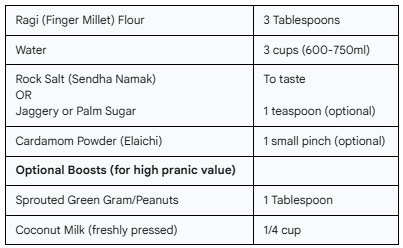
Ingredients
Instructions
Step 1: Prepare the Ragi Slurry
- In a bowl, take 3 tablespoons of Ragi Flour.
- Add about half a cup of water and mix well to create a smooth, lump-free slurry. Set this aside.
Step 2: Cook the Kanji
- In a heavy-bottomed pan, bring the remaining 2.5 cups of water to a boil.
- Once the water is boiling, reduce the heat to low.
- Stir the Ragi slurry from Step 1 and pour it into the boiling water slowly, stirring continuously to prevent lumps from forming.
- Keep stirring and let the mixture cook on low heat for about 5 to 7 minutes. The mixture will thicken considerably and lose its raw flour smell. It should look glossy and cooked.
- Turn off the heat.
Step 3: Flavor and Sweeten
- Stir in Rock Salt to taste.
- If you prefer a sweet version, stir in the optional Jaggery or Palm Sugar until dissolved.
- Add the optional pinch of Cardamom Powder (for the sweet version).

Step 4: Adding High Pranic Elements (Optional but Recommended)
If desired, stir in sprouted green gram, groundnuts, nut paste, and coconut milk to savory kanji.
Try adding nuts, dried fruits, fresh fruits, coconut milk, and more to sweet kanji. You can also have these date-nut jam and date-fruit jam recipes out as toppings.
Adding raw elements ensures you meet the 50% raw food minimum.

Serving Suggestions
- Serve the Kanji warm or at room temperature. It might thicken if cooled.
- For a savory Kanji (without jaggery), you may optionally add a small, light tempering (tadka) of 1/2 teaspoon of Mustard Seeds and a few Curry Leaves spluttered in a teaspoon of Oil.
- The consistency can be adjusted by adding more warm water or coconut milk while serving.
Enjoy this light, restorative meal that supports deep sadhana!
Have you incorporated millets like Ragi into your spiritual diet? Share your experience with positive-pranic cooking or your favorite kanji topping below!

Comments
Post a Comment